Deciding between a stepper motor or a servo motor for your CNC router can be a tough decision. There are a lot of factors to consider, such as the type of work you’ll be doing and the size and power of your machine. In this article, we’ll break down the differences between stepper and servo motors so that you can make the best choice for your needs.
What is a Stepper Motor?
A stepper motor is an electric motor that converts electrical pulses into discrete mechanical movements. The motor’s position can then be controlled very precisely, making it ideal for use in applications where accuracy is critical. Stepper motors are widely used in a variety of industries, including semiconductor manufacturing, automotive assembly, and medical equipment.
What is a Servo Motor?
A servo motor is a type of motor that is used to control the movement of objects. It is typically used in applications where precise control is required, such as in robotics or CNC machines. Servo motors are available in a variety of sizes and power levels to suit different applications.
Pros and Cons of Stepper Motors
Pros:
- Stepper motors are more precise than servo motors in static positioning, making them ideal for projects that require high accuracy without aggressive motion profiles.
- They are also more affordable than servo motors, making them a good option if you are working with a tight budget.
- Stepper motors are easier to control than servo motors, so they may be a better choice if you are new to CNC routers.
Cons:
- Stepper motors can produce vibrations, which can impact the quality of your finished product.
- They also tend to generate more heat than servo motors, so they may not be the best choice if you are working with delicate materials — or when you have, for example, 3D-printed motor mounts.
Pros and Cons of Servo Motors
Servo motors are more expensive than stepper motors, but they offer several advantages. Servo motors are more precise in dynamic applications and have better torque control. They also can start and stop more quickly than stepper motors — allowing you to have very high acceleration values.
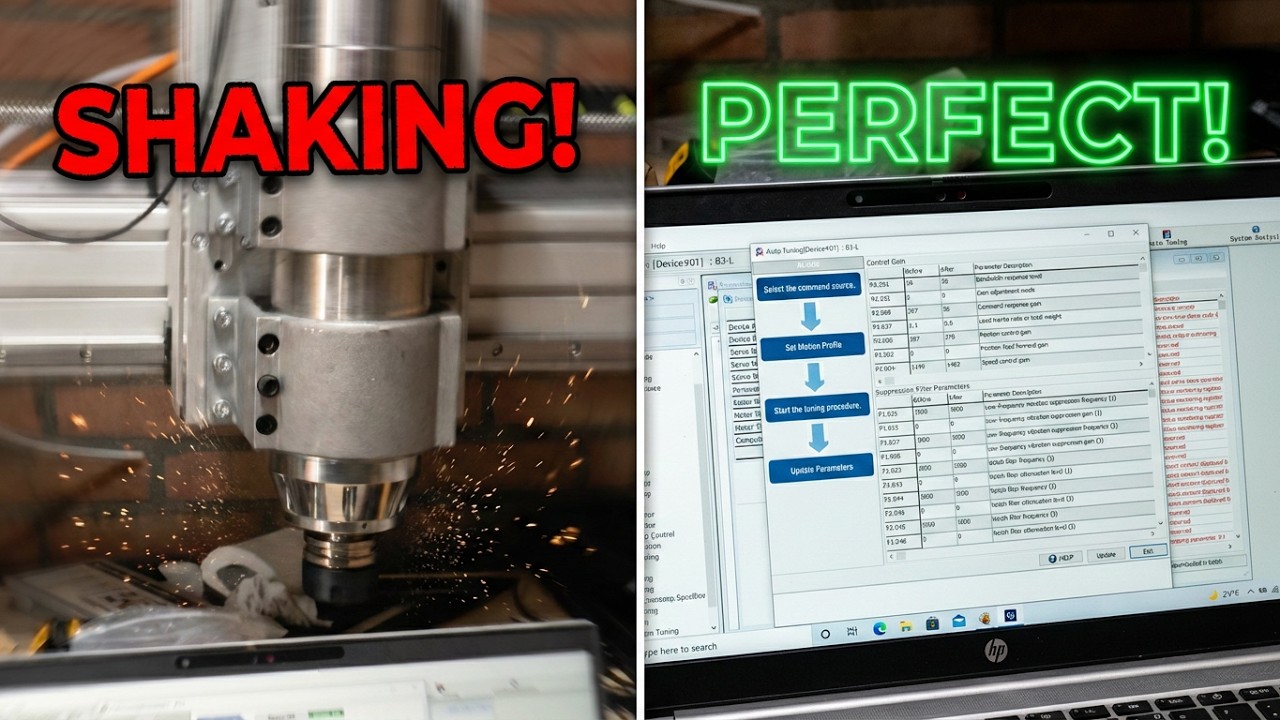
However, servo motors require more complex controllers and are more sensitive to vibrations. Due to requiring a control algorithm (PI or PID), it requires you to tune each motor independently to achieve good performance during acceleration and deceleration. This aspect should not be underestimated — especially with hobby-grade servo systems.
That said, modern drives have made this much less of a barrier than it used to be — see my write-up on effortless auto-tuning of Delta B3 & A3 servos.
Which should you pick?
- Pick steppers if: it’s your first CNC, budget matters, the machine is small-to-medium, and you don’t need aggressive acceleration.
- Pick servos if: you want high acceleration, heavy cutting, or you’re building a machine where closed-loop feedback and torque control matter — and you’re willing to invest the time (or the drive budget) to get the tuning right.
FAQ
Can’t decide? Come ask in the Discord — happy to help you pick based on your specific build.